Choosing the best 12v lifepo4 battery is not simply a matter of finding the largest capacity or lowest price. Your decision should reflect real operating conditions, including load size, daily energy use, charging equipment, temperature, storage space, and expected service life. A battery powering a small fish finder has different demands from one running a refrigerator, inverter, or camper lighting system. The numbers matter. So does the context.
Battery educator Will Prowse offers a practical reminder: “Do not buy a battery based on capacity alone.” That principle deserves attention. A reliable 12v lifepo4 battery should include a well-designed battery management system, balanced cells, clear protection limits, and credible cycle-life testing. Look for usable capacity, not only the advertised amp-hour figure. Check continuous discharge ratings carefully. A battery labelled 100Ah may not safely support every 12-volt inverter.
Details can reveal quality. Examine terminal strength, case protection, low-temperature charging control, warranty terms, and manufacturer support. Ask whether testing uses realistic conditions or ideal laboratory settings. Some product pages remain vague. That is a warning sign.
This guide will compare the features that genuinely affect performance, safety, and value. It will also question common assumptions. Bigger is not always better. Cheap is not always economical. Even experienced buyers can overlook standby losses, winter charging, or installation clearance. A careful choice begins with your actual energy habits, not attractive marketing language.
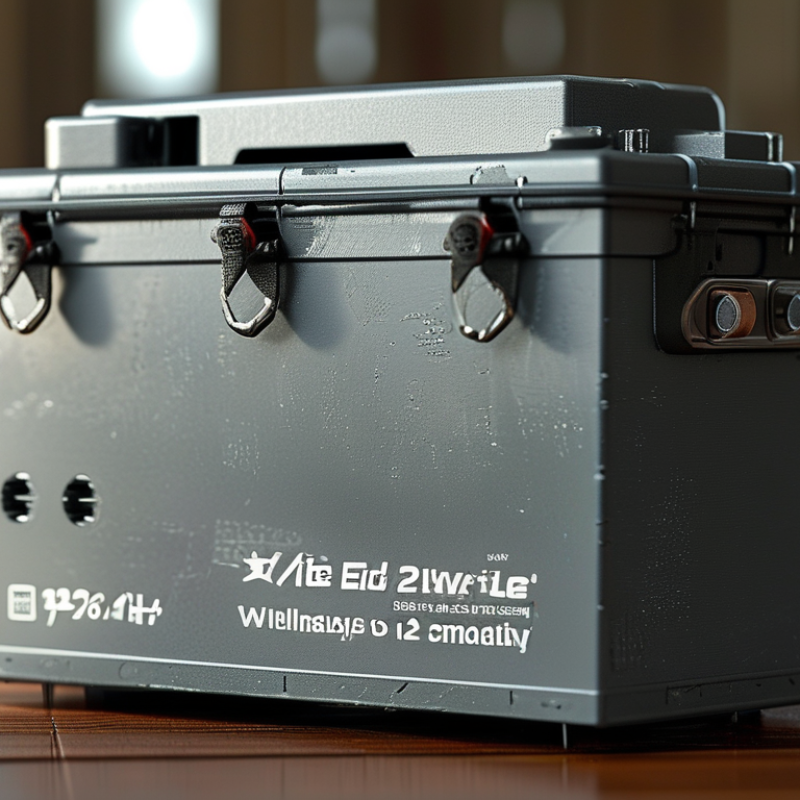
A 12V LiFePO4 battery uses lithium iron phosphate as its cathode material. Its nominal voltage is about 12.8V, higher than a traditional 12V lead-acid battery during much of its discharge. The voltage curve stays relatively flat, so devices may receive steady power. This chemistry also offers good thermal stability and a long service life when operated within its limits. Actual performance depends on temperature, charging current, discharge depth, and battery management system quality.
Applications include solar storage, recreational vehicles, marine electronics, portable power, and emergency backup systems. A 100Ah battery stores roughly 1,280Wh at its nominal voltage, although usable energy depends on reserve settings and system losses. Check the inverter’s continuous and startup current carefully. Also confirm that the charger supports LiFePO4 charging profiles. Cold-weather charging needs special attention because charging below freezing can damage the cells unless protection is provided.
Capacity is not the only selection factor. Measure the compartment, inspect terminal placement, and verify cable sizes. A higher Ah rating may create unnecessary weight or charging demands. My earlier assumption that any 12V replacement would work was incomplete. Alternators, solar controllers, and low-voltage cutoffs may need adjustment. One practical check is simple: compare the battery’s continuous current rating with the real load, not just the appliance’s advertised wattage. That small detail is easy to miss.
Choosing a 12V LiFePO4 battery starts with measuring real power needs, not guessing from appliance labels. List each device, its wattage, and daily operating hours. Multiply watts by hours to estimate energy consumption in watt-hours. A 60-watt refrigerator running eight hours needs about 480 watt-hours.
Add the loads together, then allow extra capacity for inverter losses, cold weather, and battery aging. A 12.8V battery rated at 100Ah stores roughly 1,280 watt-hours under ideal conditions. Usable energy may be lower, depending on the recommended depth of discharge and the battery management system. Leave room. Do not size the battery only for average use. Starting currents from pumps, compressors, and motors can be several times higher than their running power. Check the battery’s continuous and peak discharge ratings.
Voltage compatibility also matters. “12V” LiFePO4 batteries usually provide about 12.8V nominally, while charging voltage can approach 14.4–14.6V. Confirm that your charger, solar controller, inverter, and connected equipment accept these values. Some older charging systems use profiles designed for lead-acid batteries and may not be suitable. I once underestimated standby consumption from small monitoring devices; the error became noticeable after several cloudy days. Measure actual current with a meter when possible. Temperature protection is valuable in freezing conditions, because charging a cold lithium battery can cause permanent damage. Recheck your calculations before purchasing.
| Battery Capacity | Nominal Voltage | Nominal Energy | Usable Energy at 90% Depth of Discharge | Typical Continuous Load Range | Recommended Maximum Inverter Size | Approximate Runtime at 100 W | Typical Applications |
|---|---|---|---|---|---|---|---|
| 20 Ah | 12.8 V | 256 Wh | 230 Wh | Up to 150 W | 300 W | About 2.1 hours | Small electronics, portable lighting, emergency backup |
| 50 Ah | 12.8 V | 640 Wh | 576 Wh | Up to 400 W | 600 W | About 5.2 hours | Fish finders, small refrigerators, camping equipment |
| 100 Ah | 12.8 V | 1,280 Wh | 1,152 Wh | Up to 800 W | 1,000 W | About 10.4 hours | RV auxiliary power, solar storage, marine systems |
| 150 Ah | 12.8 V | 1,920 Wh | 1,728 Wh | Up to 1,000 W | 1,500 W | About 15.5 hours | Extended off-grid use, communications equipment, backup power |
| 200 Ah | 12.8 V | 2,560 Wh | 2,304 Wh | Up to 1,500 W | 2,000 W | About 20.7 hours | Large RV systems, cabins, higher-demand solar applications |
| 300 Ah | 12.8 V | 3,840 Wh | 3,456 Wh | Up to 2,000 W | 2,500 W | About 31.1 hours | Long-duration backup, off-grid installations, high-capacity energy storage |
Choosing the best 12V LiFePO4 battery requires more than comparing capacity and price. Inspect the cell construction, busbars, terminals, and enclosure quality. Consistent voltage readings suggest better cell matching. Ask for test conditions, not just impressive cycle-life numbers. A battery rated for 4,000 cycles may reach that figure only at a shallow discharge, moderate temperature, and controlled charging rate.
Safety depends heavily on the battery management system, or BMS. Look for protection against overcharging, deep discharge, excessive current, short circuits, and high temperature. Low-temperature charging protection is especially important in cold climates. Without it, charging below freezing can permanently damage the cells. Independent test reports and clear technical documentation add confidence. Still, documents do not replace careful installation.
Cycle life also depends on daily use. Keeping the battery between roughly 10% and 90% state of charge can reduce stress, although exact limits vary by design. I have seen users focus on capacity while ignoring loose terminals and undersized cables. That mistake creates heat. I once trusted a published cycle figure too quickly; the missing discharge conditions made the comparison weak. It is a useful reminder to question perfect claims.
Tips: Compare usable capacity, not only nominal amp-hours. Check the BMS continuous current rating against your inverter or motor. Confirm charging limits for your environment. Keep records of voltage, temperature, and performance over time. Short notes can reveal problems early.
How to Choose the Best 12V LiFePO4 Battery?
When choosing a 12V LiFePO4 battery, measure the available space first. Check length, width, height, terminal position, and ventilation clearance. A battery may fit the compartment but still block the cables. Most 12V LiFePO4 batteries deliver about 12.8 volts nominally. Confirm the required capacity in amp-hours for your appliances and expected operating time. Weight also matters. A lighter battery can simplify installation, but low weight should not replace careful specification checks.
Compatibility requires more than matching voltage. Inspect the battery management system’s continuous discharge rating. Compare it with your inverter, motor, or other equipment’s starting current. Check cable size, fuse placement, terminal style, and mounting support. I once estimated cable length by eye and needed to redo the installation. Small mistakes can create heat, voltage loss, or loose connections. Read the battery datasheet and your equipment manual together.
Charging requirements deserve close attention. Use a charger or solar controller with a LiFePO4 charging profile, not a basic lead-acid setting. Confirm charging voltage, maximum current, and whether automatic temperature protection is available. Charging below freezing can permanently damage the cells unless the battery has suitable protection. An alternator may also require a compatible charging device. Do not trust a label alone. Measure the compartment, review the specifications, and question any number that seems unusually optimistic.
Compare nominal energy and a 0.5C charge-current planning reference across common 12V LiFePO4 battery capacities. Nominal energy is calculated as capacity × 12.8V.
| Nominal Capacity | Nominal Energy | Typical Planning Size | Typical Weight | Charge-Current Reference |
|---|---|---|---|---|
| 20Ah | 256Wh | Approx. 180 × 75 × 170mm | About 3–4kg | 4–10A at 0.2C–0.5C |
| 50Ah | 640Wh | Approx. 195 × 165 × 170mm | About 6–8kg | 10–25A at 0.2C–0.5C |
| 100Ah | 1,280Wh | Approx. 330 × 175 × 215mm | About 10–13kg | 20–50A at 0.2C–0.5C |
| 200Ah | 2,560Wh | Approx. 520 × 240 × 220mm | About 20–25kg | 40–100A at 0.2C–0.5C |
Selecting the best 12V LiFePO4 battery starts with your actual use case, not the advertised capacity. A 12V LiFePO4 battery usually provides about 12.8V nominally. Its stable voltage suits caravans, marine electronics, solar storage, and emergency backup systems. For an RV, compare daily energy use with usable capacity. A 100Ah battery stores roughly 1.28kWh before system losses. Leave a practical reserve for cloudy weather and aging.
Cold environments require extra attention. Charging below 0°C can damage lithium cells, so choose a battery with low-temperature charge protection. Marine users should verify enclosure sealing, terminal protection, and vibration resistance. Backup users need continuous output ratings, not only peak figures. The International Energy Agency reported that global battery demand reached about 750GWh in 2023, increasing nearly 40% year over year. Growth improves availability, but quality still varies.
I once selected capacity from peak loads alone. That was a mistake. The inverter started successfully, but the battery emptied sooner than expected. Check the battery management system’s continuous current, peak current, and communication features. For household storage, compare these details with inverter requirements and IEC 62619 or UL 1973 testing evidence. According to BloombergNEF’s 2024 battery price survey, average lithium-ion pack prices fell to 115 dollars per kWh. Lower prices help, but they do not replace careful specifications, installation quality, or realistic load calculations.