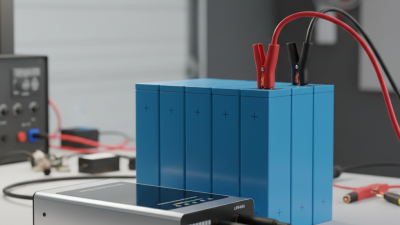
How to Choose the Best Lithium Battery Charger for Your Needs?
Choosing the right lithium battery charger can significantly impact performance and longevity. According to Dr. Emily Carter, an expert in battery technology, “A good charger is crucial for maximizing battery life and safety.” This emphasizes the need for careful selection.
Lithium battery chargers come in various types and specifications. Not all chargers provide the same efficiency. High-quality chargers often feature smart technology to control charging speeds. However, some budget options may lack these essential features. A poor choice could lead to reduced battery capacity over time or potential hazards.
Understanding your specific needs is vital. Assess factors like battery capacity and charging frequency. Misjudging these can lead to frustration and inefficiencies. Even experienced users sometimes overlook crucial details. Prioritize safety features and reliability in any charger you consider. The correct lithium battery charger can make all the difference, ensuring your devices run smoothly and last longer.
Understanding Lithium Battery Basics and Charging Requirements
Understanding lithium battery basics is crucial for effective charging. Lithium batteries require specific voltages and currents for optimal performance. They typically charge between 3.0V and 4.2V, which means using the right charger is essential. Overcharging can cause heat buildup, leading to battery damage or reduced lifespan. A suitable charger will automatically cut off when the battery is fully charged.
Another important factor is the charge rate. Most lithium batteries have a recommended charge rate, often expressed in C-rates. Charging at a higher rate can speed up charging time but may decrease battery life. Users should also consider temperature conditions. Charging in extreme temperatures can harm battery efficiency and safety.
While many chargers claim to be effective, not all meet the necessary standards. It’s essential to do thorough research. Look for chargers that include safety features like short-circuit protection and thermal regulation. Balancing these needs can be tricky. Assessing your specific battery type and usage is vital to find the best charger for your needs.
Identifying Your Lithium Battery Type and Specifications
Identifying the type of lithium battery you own plays a significant role in selecting the right charger. Lithium-ion and lithium polymer are common types, each with distinct charging characteristics. According to a report by the International Energy Agency, lithium-ion batteries typically require a charging voltage of around 4.2 volts per cell. In contrast, lithium polymer batteries generally may hold similar voltages but differ in current requirements. Knowing these specifications ensures compatibility with your charger and prolongs battery life.
Understanding amp-hour (Ah) ratings is also crucial. A higher Ah rating indicates a capacity for longer usage periods. If your charger delivers a low current but your battery has a high capacity, charging it may take excessively long. A 2019 study suggested that an optimal balance between charger output and battery specifications can reduce charge time significantly. You might encounter discrepancies in performance when using mismatched chargers, leading to potential damage or inefficiency.
Reflect on your charging habits too. Frequent overcharging or using the wrong charger can decrease battery lifespan. While most modern chargers have protective features, relying solely on these can be risky. Regularly monitoring battery health and staying informed about specifications will enhance your charging experience and ensure safety.
How to Choose the Best Lithium Battery Charger for Your Needs?
| Battery Type |
Voltage (V) |
Capacity (Ah) |
Charger Output (A) |
Charging Time (hrs) |
Recommended Features |
| 18650 Lithium-Ion |
3.7 |
3.0 |
1.0 |
3 |
Overcharge protection, LED status indicator |
| Lithium Polymer |
3.7 |
1.5 |
1.5 |
2 |
Smart charging technology, compact design |
| Lithium Iron Phosphate |
3.2 |
50.0 |
20.0 |
2.5 |
Built-in temperature control, long cycle life |
| LiFePO4 |
12.8 |
100.0 |
30.0 |
2 |
High discharge rate, waterproof design |
Evaluating Charger Features and Compatibility
When choosing a lithium battery charger, several features and compatibility aspects are crucial to consider. Understanding the voltage and capacity is a start. Lithium batteries typically range from 3.7V to 14.8V. A charger must match the battery specifications. This alignment ensures optimal charging without risking damage. Reports from industry standards indicate that mismatched voltages can lead to battery degradation.
Safety features are another key consideration. Look for chargers with overcharge protection and temperature control. According to Battery University, improper charging can reduce battery life by up to 20%. Built-in safety features can help avoid these issues, making chargers more reliable for long-term use. Additionally, charging speed varies among products. Fast chargers may suit urgent needs, but they can induce heat, impacting battery longevity.
Compatibility is vital when selecting a charger. Many lithium batteries come in various shapes and capacities. Ensure the charger can accommodate different battery types, especially if you have multiple devices. Industry studies show that using an incompatible charger can increase the likelihood of battery failure. Therefore, it is essential to thoroughly evaluate both the charger's features and its compatibility with your specific battery needs.
Comparing Charging Speeds and Efficiency Ratings
When selecting a lithium battery charger, charging speed and efficiency ratings are critical factors. Research suggests that a charger with a higher efficiency rating minimizes energy loss. For instance, industry reports indicate that chargers with over 90% efficiency can save significant energy. In contrast, less efficient models may waste up to 20% of energy. This is especially important in large-scale applications.
Charging speed is another significant aspect. Many chargers can provide varying current levels, typically ranging from 0.5A to 10A. A report from a leading battery research organization shows that using a charger with a 10A output can reduce charging time by up to 50%, compared to lower-rated chargers. However, faster charging may increase the risk of overheating, potentially leading to battery degradation.
It’s also vital to consider charger compatibility with your specific battery type. Not all lithium batteries support rapid charging. Using an inappropriate charger can shorten battery life or result in unsafe conditions. Professionals recommend regularly monitoring the temperature during charging. Keeping batteries within recommended thermal limits enhances longevity and performance. Investing time in understanding these factors ensures you make an informed decision.
Considering Safety Features and User Reviews
When selecting a lithium battery charger, user reviews play a crucial role in ensuring safety and efficiency. Start by exploring various online platforms. Look for detailed feedback, especially regarding safety features. Users often share experiences about how a charger performs under different conditions. Some might highlight potential risks or areas of concern, which can guide others in their choices.
Safety features should never be overlooked. Chargers that include overcharge protection or thermal management can prevent accidents. User reviews often reflect personal experiences with safety issues that manufacturers may not disclose. It's vital to consider these insights. Sometimes, a highly rated charger might lack essential safety mechanisms. Pay attention to those who experienced problems with specific chargers.
Don't forget about product certifications. Reviews sometimes mention whether a charger meets industry standards. This is an essential indicator of reliability. Most users appreciate brands that value transparency and safety. Reading through various reviews can reveal a charger’s true performance. Trust the insights of fellow users; their experiences can point you toward the safest and most effective charger for your needs.

 2 Enterprise Lane, Bedford, PA 15522
  (800) 771-7139
  sales@site_040a9139-525b-4487-aedd-8b22114146ed